
دنیای زبان انگلیسی ( بهروزپور )
لغات و اصطلاح .داستان کوتاه . شعر.جوک .ضرب المثل.اشپزی.رمان. نمایشنامه.متن دوزبانه
دنیای زبان انگلیسی ( بهروزپور )
لغات و اصطلاح .داستان کوتاه . شعر.جوک .ضرب المثل.اشپزی.رمان. نمایشنامه.متن دوزبانه


fire waterfall ابشار اتش


منبع عکس :سایت گوگل
This park was gazetted as a national park in 1890. It is world famous for its rugged terrain, waterfall and century-old pine trees. It covers 1200 sq km and the "fire" waterfall of El Capitan is one of the most spectacular of all scenery. 
The spectacular view of the waterfall is created by the reflection of sunlight hitting the falling water at a specific angle. This rare sight can only be seen at a 2-week period towards the end of February. To photograph this rare event, photographers would often have to wait and endure years of patience in order to capture them. The reason is because its appearance depends on a few natural phenomena occurring at the same time...and some good luck.
ادامه مطلب ...
Masouleh ماسوله
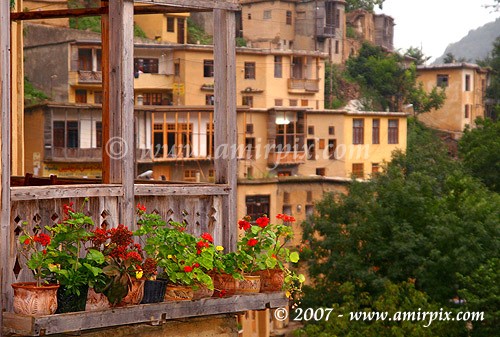
Masouleh (Persian: ماسوله, Māsūleh; also known as Masuleh) is a village in the Gilan Province of Iran. Historical names for the village include Māsalar and Khortāb. It was founded in the 10th century AD, and its current population is estimated to be around 800 people.
Geography, History and climate
Masouleh is approximately 60 km southwest of Rasht and 32 km west of Fuman. The village is 1 050 meters above sea level in the Alborz (or Elburz) mountain range, near the southern coast of the Caspian Sea. The village itself has a difference in elevation of 100 meters.
The first village of Masouleh is approximately established around 1006 AD, 6 km Northwest of the current village, and it is called Old-Masouleh (Kohneh Masouleh in Persian). People moved from Old-Masouleh to the current village because of Pestilence and neighbor attacks. Some of old families do have a written Ancestral tree as old as one hundred years.
Masouheh-Rood-Khan is the river passing through the village with a water fall 200m away from the village. Many other springs are found around Masouleh.
Masouleh is also surrounded by forest from valley to mount.
Fog is the predominate weather feature of Masouleh. Although it has been written that the community was established around 10 AD, the province of Gilan has a long history.
What is Ashura?
What is Ashura?

In the Islamic calendar, 10th day of the month of Muharram is the day of 'Ashoora, a day of mourning for all feeling Muslims. It is the day on which, in the year of 61 Hijri (680 AD), in a place called Karbala, in Iraq, Imam Hussain, the grandson of the Prophet of Islam, sacrificed his life and the lives of many of his family members and friends, in order to save the teachings of Islam from utter distortion and destruction.
What led to this tragic event of Karbala?
Even in the lifetime of the Prophet of Islam, there were people whose tongues professed faith in Islam but whose hearts lay elsewhere. These people were called "Munafiqeen" (hypocrites) by the Holy Quran. The reasons that these people joined the ranks of Muslims were manifold, some of which were as follows:
1. Enmity towards Islam prompted them to sow discord among the Muslims from within, by distorting the Prophet's message wherever and however possible.
2. Islam was spreading fast and gaining power. They decided to join the winning side and seize whatever worldly gains they could lay their hands on.
The activities of such people gained impetus after the Prophet's passing away, and reached a peak when Muawiya, the son of Abu Sufyan, claimed himself the ruler of Syria.
The hypocrites were now in power and so they mounted a highly organized assault against the very roots of Islam, and they were on the verge of total success. Some of the priorities of the attack were to destroy the awareness of the common Muslims or to destroy their faculty of expression. This was achieved through bribes, through terror and through propagation of ignorance. When these weapons failed in silencing the tongue of a strong Muslim, then that tongue was silenced by death.
By all these means, within half a century after the Prophet's passing away, Islam had been distorted so much that it became totally unrecognizable, so unrecognizable that people knew of the debaucheries of Yazid, son of Muawiya, and still accepted him as a successor of the Prophet and a true leader of the Muslims.
With the advent of Yazid, the vilest of the vile, the mission of destroying the roots of Islam had reached its peak. The right and the wrong had been intermixed so much that it became impossible for a common man to differentiate between them.

This would have been the end of Islam, but for Hussain (AS = alayhi as-salaam, or peace be upon him), grandson of the Prophet (PBUH) and son of Ali ibn Abi Talib (AS) and Fatima az-Zahra (AS).
ادامه مطلب ...
اصطلاح
ساقدوش: best man
منفی بافی :wet blanket
غرق مطالعه شدن :in brown study
بلا تکلیف :at loose ends
ادم خوش قول :an of his word
چند شغله :moonlighting
ادامه مطلب ...

The Sound and the Fury :خشم و هیاهو (ویلیام فالکنر)
The Sound and the Fury is a novel written by the American author William Faulkner. It employs a number of narrative styles, including the technique known as stream of consciousness, pioneered by 20th century European novelists such as James Joyce and Virginia Woolf. Published in 1929, The Sound and the Fury was Faulkner's fourth novel, and was not immediately successful. In 1931, however, when Faulkner's sixth novel, Sanctuary, was published — a sensationalist story which Faulkner later claimed was written only for money — The Sound and the Fury also became commercially successful, and Faulkner began to receive critical attention.
In 1998, the Modern Library ranked The Sound and the Fury sixth on its list of the 100 best English-language novels of the 20th century
Plot introduction
The Sound and the Fury is set in the fictional Yoknapatawpha County. The novel centers on the Compson family, former Southern aristocrats who are struggling to deal with the dissolution of their family and its reputation. The novel is separated into four distinct sections. The first, April 7, 1928, is written from the perspective of Benjamin "Benjy" Compson, a 33-year-old man with severe mental handicaps. Benjy's section is characterized by a highly disjointed narrative style with frequent chronological leaps. The second section, June 2, 1910, focuses on Quentin Compson, Benjy's older brother, and the events leading up to his suicide. In the third section, April 6, 1928, Faulkner writes from the point of view of Jason, Quentin's cynical younger brother. In the fourth and final section, set a day after the first, on April 8, 1928, Faulkner introduces a third person omniscient point of view. The last section primarily focuses on Dilsey, one of the Compson's black servants. Jason is also a focus in the section, but Faulkner presents glimpses of the thoughts and deeds of everyone in the family.